Passer au contenu principal
NOREN 暖簾
ExpériencesÀ propos
Se connecterS'inscrire
🌊
← Retour au Journal
MunakataOkinoshimaWorld HeritageOshima Island

Okinoshima Island: Why You Can't Visit, and Where to See It

NOREN

7 septembre 2026

7 min de lecture

About sixty kilometres off the coast of Munakata, north of Fukuoka, there is an island four kilometres around where no one lives and almost no one is allowed to land. Okinoshima was inscribed as a UNESCO World Heritage site in 2017, as the centre of the “Sacred Island of Okinoshima and Associated Sites in the Munakata Region.” It is the reason people search for Munakata at all. It is also the one place on the list you cannot go.

One note on the name: this Okinoshima is in Fukuoka Prefecture, in the Genkai Sea. It is not Okinoshima town in the Oki Islands of Shimane Prefecture, which is a different place that you can visit.

What the island is

Okinoshima is itself a shrine. For roughly five centuries, from the fourth century on, rituals were held on the island to pray for safe passage across the sea to the Korean peninsula and China, and the offerings were left where they were placed. Some 80,000 objects have been recovered, mirrors, gold rings, glass from as far as Persia, and all of them are designated National Treasures. The island is sometimes called the Shosoin of the sea, after the imperial treasure house in Nara.

Why it is closed

The whole island belongs to Munakata Taisha, the shrine that keeps it. Entry is forbidden to the general public; a priest lives on the island in rotation, and the old rules still hold, nothing may be taken from the island, and what is seen there is not to be spoken of. World Heritage status did not open the island. It confirmed that it would stay closed.

Who can land

Today, only the shrine's priests. Women are not allowed on the island. Until 2017, a group of around two hundred men from the public could land once a year, for a festival on 27 May, after purifying themselves in the sea. After the World Heritage listing that year, Munakata Taisha ended this, and since 2018 no one from the public goes ashore.

Expériences associées
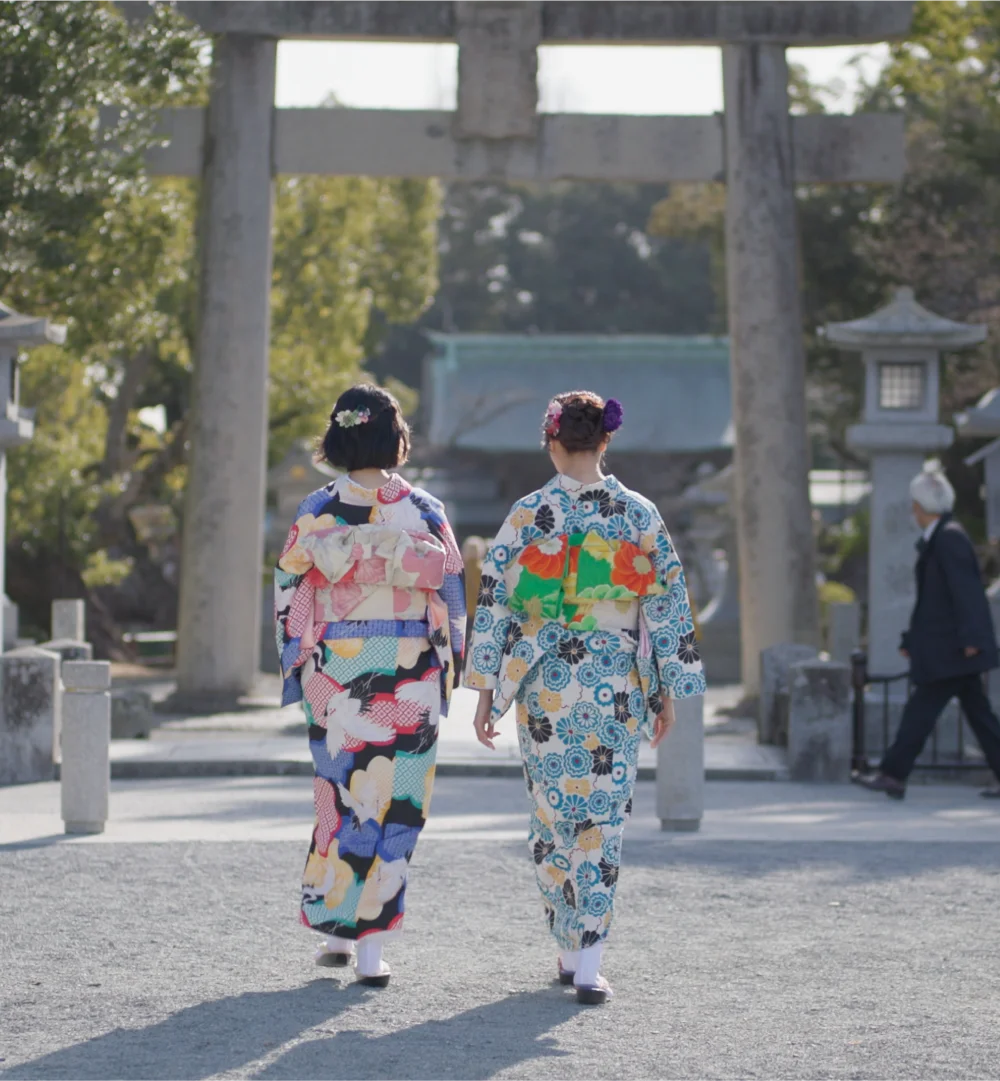
En kimono vers les trois déesses de Munakata — Du festival mensuel à la vénération lointaine du sanctuaire offshore, une journée visitant les divinités

DMO Munakata✓

En kimono vers les trois déesses de Munakata — Du festival mensuel à la vénération lointaine du sanctuaire offshore, une journée visitant les divinités

¥47,000/ personne 8 h 30 min
Apprenez l'art du sel avec le « Maître du Sel »

DMO Munakata✓

Apprenez l'art du sel avec le « Maître du Sel »

¥5,500/ personne 2 h

Experience Fukuoka, for real.

Find handpicked local experiences that no guidebook covers.

Browse experiences →

Three ways to get close

  • Hetsu-miya, on the mainland. Munakata Taisha is one shrine in three places, each dedicated to one of three goddesses. Hetsu-miya is the one you can walk into, about an hour from Hakata: a rapid train on the JR Kagoshima Line to Togo Station (about 30 minutes), then a Nishitetsu bus to Munakata Taisha-mae (about 12 minutes). The museum on its grounds holds many of the National Treasures from the island.
  • Oshima Island. The same bus continues to Konominato port. From there, the car ferry takes about 25 minutes and the passenger boat about 15. Nakatsu-miya, the second of the three shrines, is here, and on the island’s north coast is a place built for looking: the Okitsu-miya Yohaisho, where people have long worshipped Okinoshima from afar. On a clear day the island is visible on the horizon.
  • The sea. Boats from Konominato go out to the waters around Okinoshima, where you pray facing the island without landing. They run only on set days in season and need a minimum number of people, so check the dates before you plan around it. This is as close as anyone who is not a priest will get.

Bus and ferry times change, and some services run only a few times a day, so check the current timetables before you go.

Oshima, once you are there

Oshima is small enough to walk and slow enough to stay. On NOREN, hosts on the island offer an hour and a half making salt from seawater with the island's salt master, a trek up Mt Mitake and around the island, and, in the right season, a night on the island for the stars. All of them are run through DMO Munakata, the local tourism body, and all of them start from the ferry port.

If you would like to see all three shrines in one day, there is also a kimono pilgrimage on the 1st and 15th of each month, the days of the shrine's monthly festival: Hetsu-miya in the morning, lunch in Konominato, then the ferry to Nakatsu-miya and the Okitsu-miya Yohaisho. See the kimono pilgrimage

The maritime worship itself is also on NOREN: a boat from Konominato to the waters off Okinoshima, prayers on deck, and a seafood lunch afterwards. See the maritime worship tour

Whether you go by boat or only as far as the north shore of Oshima, the point is the same. You are not visiting the island. You are doing what people here have done for more than 1,500 years, facing it from a distance, and leaving it alone.