MunakataOkinoshimaWorld HeritageOshima Island
Okinoshima Island: Why You Can't Visit, and Where to See It
M
NOREN
Co-founder · NOREN
September 7, 2026
7 min read
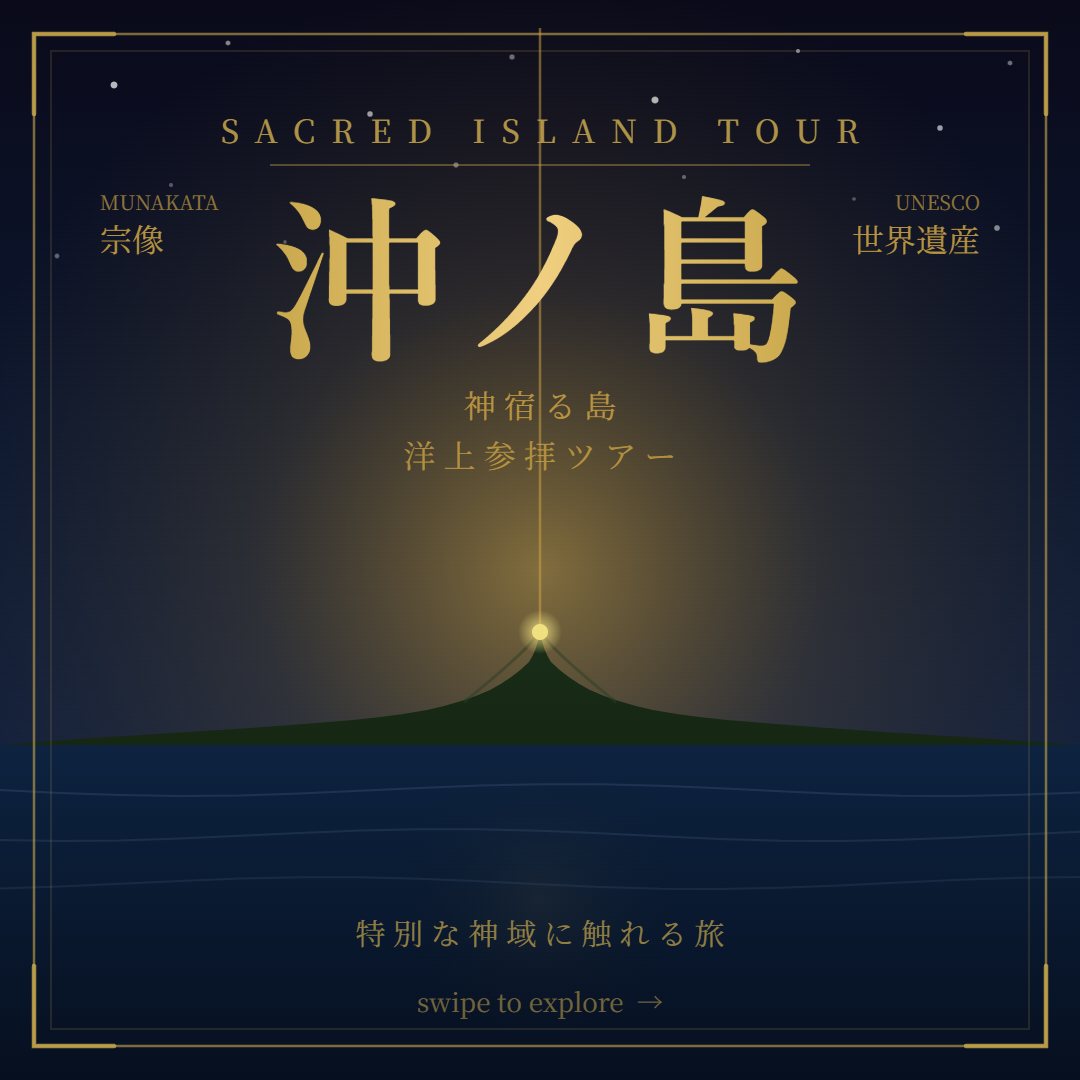
About sixty kilometres off the coast of Munakata, north of Fukuoka, there is an island four kilometres around where no one lives and almost no one is allowed to land. Okinoshima was inscribed as a UNESCO World Heritage site in 2017, as the centre of the “Sacred Island of Okinoshima and Associated Sites in the Munakata Region.” It is the reason people search for Munakata at all. It is also the one place on the list you cannot go.
One note on the name: this Okinoshima is in Fukuoka Prefecture, in the Genkai Sea. It is not Okinoshima town in the Oki Islands of Shimane Prefecture, which is a different place that you can visit.
What the island is
Okinoshima is itself a shrine. For roughly five centuries, from the fourth century on, rituals were held on the island to pray for safe passage across the sea to the Korean peninsula and China, and the offerings were left where they were placed. Some 80,000 objects have been recovered, mirrors, gold rings, glass from as far as Persia, and all of them are designated National Treasures. The island is sometimes called the Shosoin of the sea, after the imperial treasure house in Nara.
Why it is closed
The whole island belongs to Munakata Taisha, the shrine that keeps it. Entry is forbidden to the general public; a priest lives on the island in rotation, and the old rules still hold, nothing may be taken from the island, and what is seen there is not to be spoken of. World Heritage status did not open the island. It confirmed that it would stay closed.
Who can land
Today, only the shrine's priests. Women are not allowed on the island. Until 2017, a group of around two hundred men from the public could land once a year, for a festival on 27 May, after purifying themselves in the sea. After the World Heritage listing that year, Munakata Taisha ended this, and since 2018 no one from the public goes ashore.
Related experiences


Experience Fukuoka, for real.
Find handpicked local experiences that no guidebook covers.
Browse experiences →